The short answer
Pure water window cleaning uses ordinary tap water that has been filtered to remove its dissolved minerals. A soft brush loosens the dirt, the pure water rinses it away, and the glass is left to dry. With no minerals or detergent left in the water, there’s nothing to leave spots or streaks, so the windows don’t need wiping.
It’s a question we’re asked all the time: how can water on its own clean a window, and why do you leave it wet? It does sound as if it shouldn’t work. This guide explains pure water window cleaning in plain English, what it does well and where it has limits, so you know what to expect from your window cleaner.
What is pure water?
Tap water contains dissolved minerals, such as calcium and magnesium, along with other substances. You can’t see them while the water is wet, but when it evaporates they stay behind. That’s what causes the white spots on a glass from the dishwasher, and the same thing happens on a window.
Pure water is simply tap water with those dissolved solids taken out. It’s filtered until almost nothing is left in it, and our vans use both reverse osmosis and deionisation to do that. You may also see it called purified, filtered or deionised water. In window cleaning, they all point to the same idea: water with nothing in it to leave a mark.
How does pure water window cleaning work?
The clean itself has four simple steps:
- The water is purified. Tap water is filtered in the van to remove the minerals.
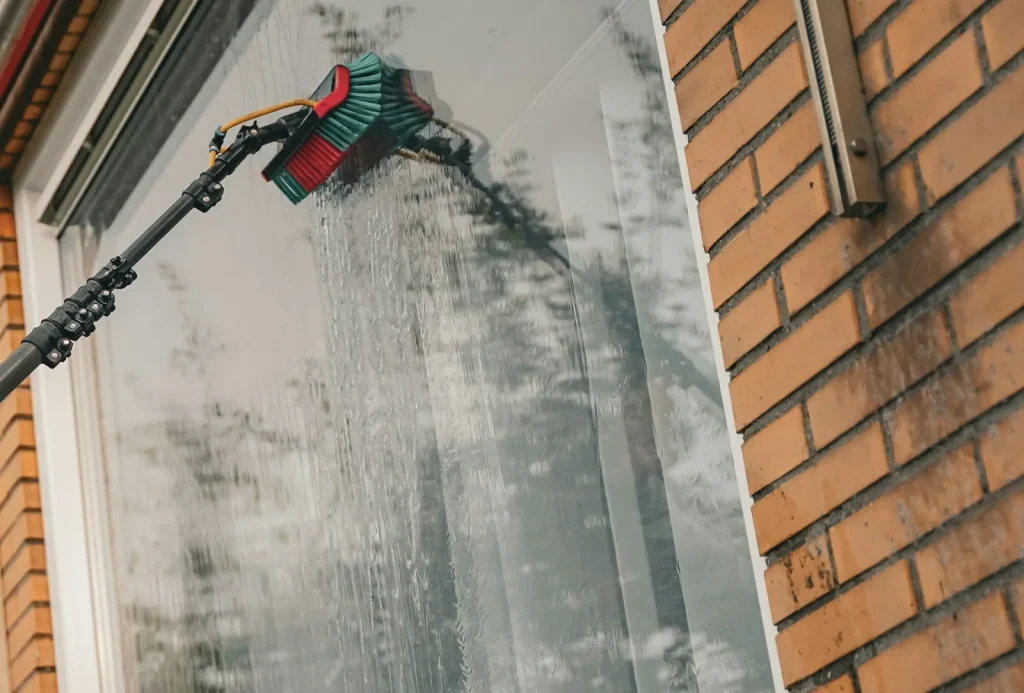
- It’s pumped up a pole. The water runs up a lightweight pole to a soft brush at the top.
- The brush does the scrubbing. The operator works the brush over the glass and frames to loosen the dirt.
- The glass is rinsed. A final rinse carries the dirt away, and the clean water is left to dry.
The water isn’t doing all the work: the brush provides the scrubbing, and the water carries the dirt off. Because the operator stays on the ground, this method also removes the need for ladders on most buildings. How water-fed pole cleaning works on site.
Why are the windows left wet?
This surprises people the first time they see it. With traditional cleaning, wet glass means the job isn’t finished. With pure water, the wet glass is the finish. The water left behind has nothing in it, so when it dries there’s nothing to leave a spot or a streak. Wiping it would only spoil the result.
Give it time to dry before you judge the clean. If you do see marks, tell your window cleaner, as they’re worth looking into.
Does pure water really clean without chemicals?
Yes, for normal dirt on glass. We use no detergents or chemicals in water-fed pole window cleaning, only purified water. That has two practical benefits for a business: there’s no soapy residue left on the glass to attract dirt, and nothing harmful runs off into your drains, planting or paving.
Why the first clean may not look perfect
Glass that’s been cleaned with detergent for years often carries a film of old residue. Pure water removes it gradually, so it can take one or two visits before the glass reaches its best. Dirt can also sit in frames and seals on a building that hasn’t been cleaned for a while, so it’s worth allowing for this before you judge the method on a single visit.
What pure water can’t do
Pure water is very good at everyday dirt, but it isn’t the right answer for everything:
- Stuck-on marks: paint, cement, sealant and old stickers need separate treatment.
- Internal glass and shop fronts: you can’t run water and a brush over an office interior, and many shop fronts look their best with a hand finish. We clean these by hand.
- Very tall buildings: our poles reach 70ft from the ground. Above that, we use cherry pickers or rope access. How high-rise windows are cleaned.
Pure water vs traditional window cleaning
| Pure water with a pole | Traditional hand clean | |
|---|---|---|
| Cleaning products | None, only purified water | Usually a detergent solution |
| Finish | Left to dry | Wiped dry by hand |
| Height | From the ground, up to 70ft with our poles | Within reach, or needs access equipment |
| Frames | Scrubbed and rinsed with the glass | Not always included, so ask |
| Best for | Most outside glass | Internal glass and many shop fronts |
How to check your window cleaner is using pure water
Water-fed poles only work with properly purified water. Professional cleaners check theirs with a TDS (total dissolved solids) meter: purified water should read at or close to zero, while tap water usually reads in the hundreds. If you’re comparing contractors, ask what their reading is. How to choose a window cleaning company.
Pure water window cleaning for your business
We’ve cleaned commercial windows across South Yorkshire since 1995, and most of the glass we look after today is cleaned with pure water from the ground, on offices, schools, warehouses, shops and apartment blocks. What affects the price, or tell us about your building on the quote form. We reply within 2 hours during office hours.
Questions
What is pure water window cleaning?
Cleaning windows with tap water that has been filtered to remove its dissolved minerals. A soft brush loosens the dirt, the pure water rinses it away, and the glass dries without spots.
Why don’t you wipe the windows dry?
Because pure water has nothing in it to leave a mark. It dries clear by itself, and wiping it would only spoil the finish.
Do you use any chemicals?
Not for window cleaning. We clean glass with purified water only, so nothing harmful runs off into drains, planting or paving.
Why are my windows not perfect after the first clean?
Glass that’s been cleaned with detergent for years often carries a film of old residue. Pure water removes it gradually, so it can take one or two visits before the glass reaches its best.
Does it work in the rain?
Usually, yes. The glass has already been scrubbed and rinsed with purified water, so we can keep working in fairly heavy rain, though never in thunder, lightning or high winds. Do window cleaners work in the rain?
Can we use pure water during a hosepipe ban?
It depends on the restrictions and how the water is used. Are window cleaners exempt from hosepipe bans?
Photo: Joshua Bowers on Unsplash.