The short answer
No. Ladders aren’t banned for window cleaners in the UK. Under the Work at Height Regulations 2005, a ladder can be used when a risk assessment shows the job is low risk and short duration, or when features of the site mean a ladder is the only practical option. What has changed is that a ladder now has to be justified, and on most commercial buildings a water-fed pole used from the ground is the safer choice.
The Work at Height Regulations came into force in April 2005, and ever since there’s been a rumour that window cleaners can no longer use ladders. It isn’t true. But the rules did change how ladders should be used, and they apply to the people who hire window cleaners as well as to the cleaners themselves.
What the Work at Height Regulations say
The regulations don’t ban any piece of equipment. They set out an order of priorities for anyone planning work at height:
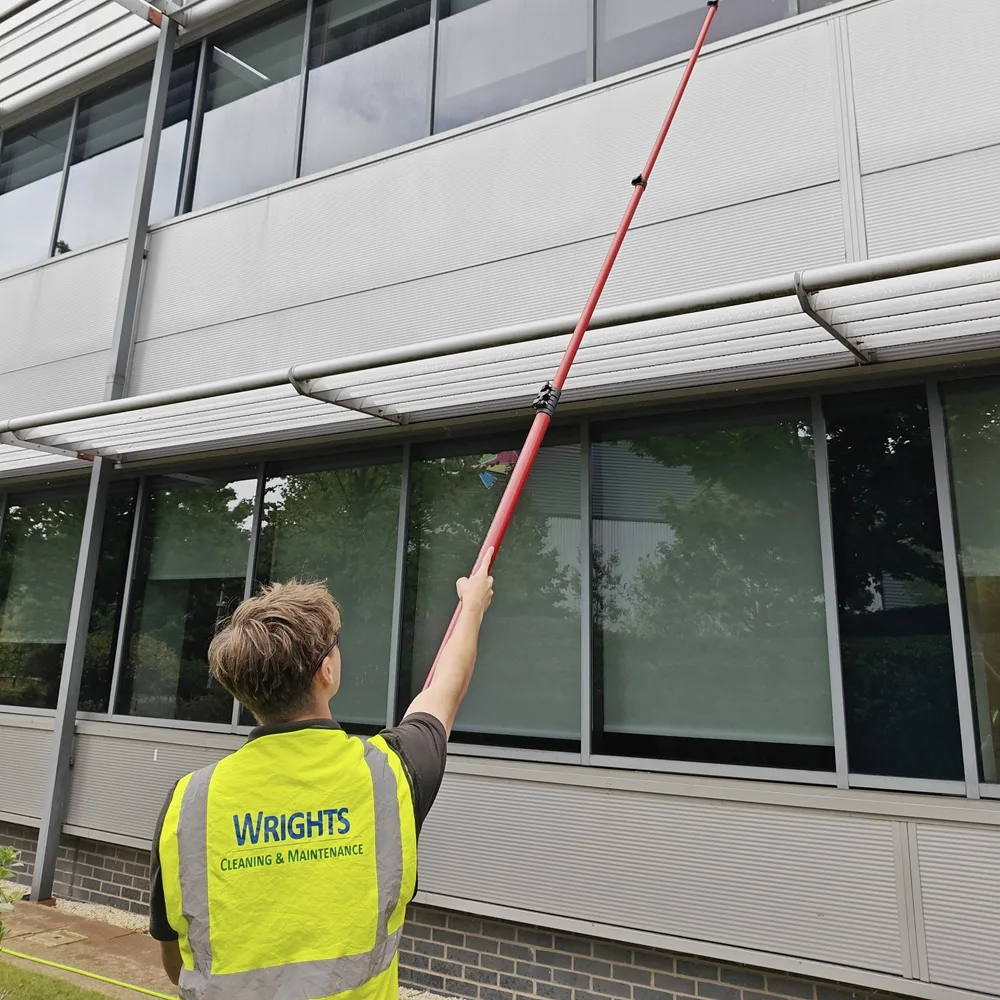
- Avoid working at height where you reasonably can. For window cleaning, that usually means a water-fed pole used from the ground.
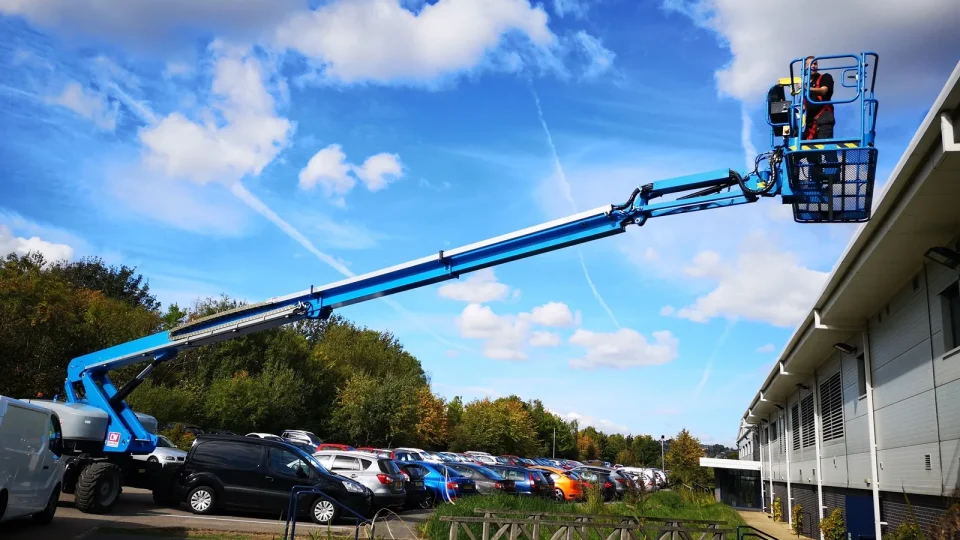
- Prevent falls where height can’t be avoided, by using the right equipment, such as a cherry picker (a mobile elevating work platform) with a trained operator.
- Minimise the distance and consequences of a fall where some risk remains.
A ladder sits near the bottom of that list. It isn’t forbidden, but there has to be a reason to use one rather than something safer. The HSE’s own guidance says ladders can be a sensible, practical option for low-risk, short-duration work. HSE guidance on working at height.
When can a window cleaner use a ladder?
A ladder can be justified when a risk assessment shows that the work is:
- Low risk: a ladder in good condition, on firm and level ground, where it can be secured and the cleaner can keep three points of contact.
- Short duration: the HSE’s guide is no more than 30 minutes in one position.
- Or needed because of the site: where features of the building mean other equipment can’t be used.
In practice, that covers jobs like these:
- Ground-floor glass, cleaned from a stepladder.
- High internal glass in receptions, atriums and school halls, where a pole or a platform isn’t practical.
- Windows above a flat roof, or behind obstructions a pole can’t get past.
- A handful of first-floor windows on an isolated building, where bringing in other equipment would be unreasonable.
- Sites where a water-fed pole van can’t park close enough and trailing hoses would be a trip hazard for the public.
Even then, the cleaner should assess the ladder work itself before starting, and follow that assessment.
What a safe ladder job looks like
- A ladder made for professional use (EN 131 Professional), checked before every use and taken out of service if it’s damaged.
- Firm, level footing, with the ladder tied, footed or fitted with a stability device.
- Three points of contact and no over-reaching: move the ladder rather than stretch.
- No work in strong winds, or when it’s icy or wet underfoot.
- A clear area below, so staff and visitors aren’t walking under the work.
- A cleaner who has been trained to use a ladder safely.
The HSE’s guidance on using ladders safely covers this in more detail.
Why most commercial windows don’t need a ladder any more
Since the regulations came in, the industry has moved to water-fed poles. Purified water is pumped up a long, lightweight pole to a soft brush, and the cleaner scrubs and rinses the glass and frames while standing on the ground. The water dries without spots, so nobody needs to reach the glass by hand.
Water-fed poles do use mains water, so they can be affected by water restrictions. Are window cleaners exempt from hosepipe bans?
Our poles reach 70ft from the ground, which covers most offices, shops, schools, warehouses and apartment blocks. Above that, we use cherry pickers and certified rope access technicians. How we clean.
If you manage a building
The regulations apply to anyone who controls work at height, and that can include the facilities manager or building owner who hires the window cleaner. Before you book, ask:
- How will you clean our windows? Will you use ladders, and if so, why?
- Can we have your risk assessment and method statement (RAMS) for our site?
- Can we see your public liability insurance, and does it cover the heights and methods you’ll use?
We clean almost every window from the ground. We only use ladders when there’s no safer way, and never above 20 feet. RAMS are always free once you’ve accepted our quote. How to choose a commercial window cleaner.
Questions
Are window cleaners allowed to use ladders?
Yes. Ladders aren’t banned, but a window cleaner should only use one when a risk assessment shows the job is low risk and short duration, or when the site means there’s no practical alternative.
Is it illegal for window cleaners to use ladders?
No. The Work at Height Regulations 2005 don’t ban ladders. They require safer equipment to be used where it’s reasonable, so a ladder has to be justified by a risk assessment.
How long can you work on a ladder?
As a guide, the HSE says no more than 30 minutes in one position. Longer jobs call for other equipment, such as a water-fed pole or a cherry picker.
Do window cleaners use ladders on commercial buildings?
Less and less. Most commercial glass is now cleaned from the ground with water-fed poles. We use ladders only when there’s no safer way, and never above 20 feet.